Vibe Coding and the SaaS Explosion: How AI Is Flooding the Market With Software
Vibe coding lets anyone build software by describing what they want. With 30,000+ SaaS companies and AI generating 41% of new code, the market has never been more crowded — or more exciting.
In February 2025, Andrej Karpathy — former Senior Director of AI at Tesla and one of the founding members of OpenAI — posted a tweet that would name an entire movement. He called it vibe coding: a new kind of programming where you "fully give in to the vibes, embrace exponentials, and forget that the code even exists."
Twelve months later, the consequences of that shift are impossible to ignore. The SaaS market has never had this many products, this many builders, or this much AI-generated code. Whether you're a founder, developer, or investor, the landscape has fundamentally changed.
What Is Vibe Coding, Exactly?
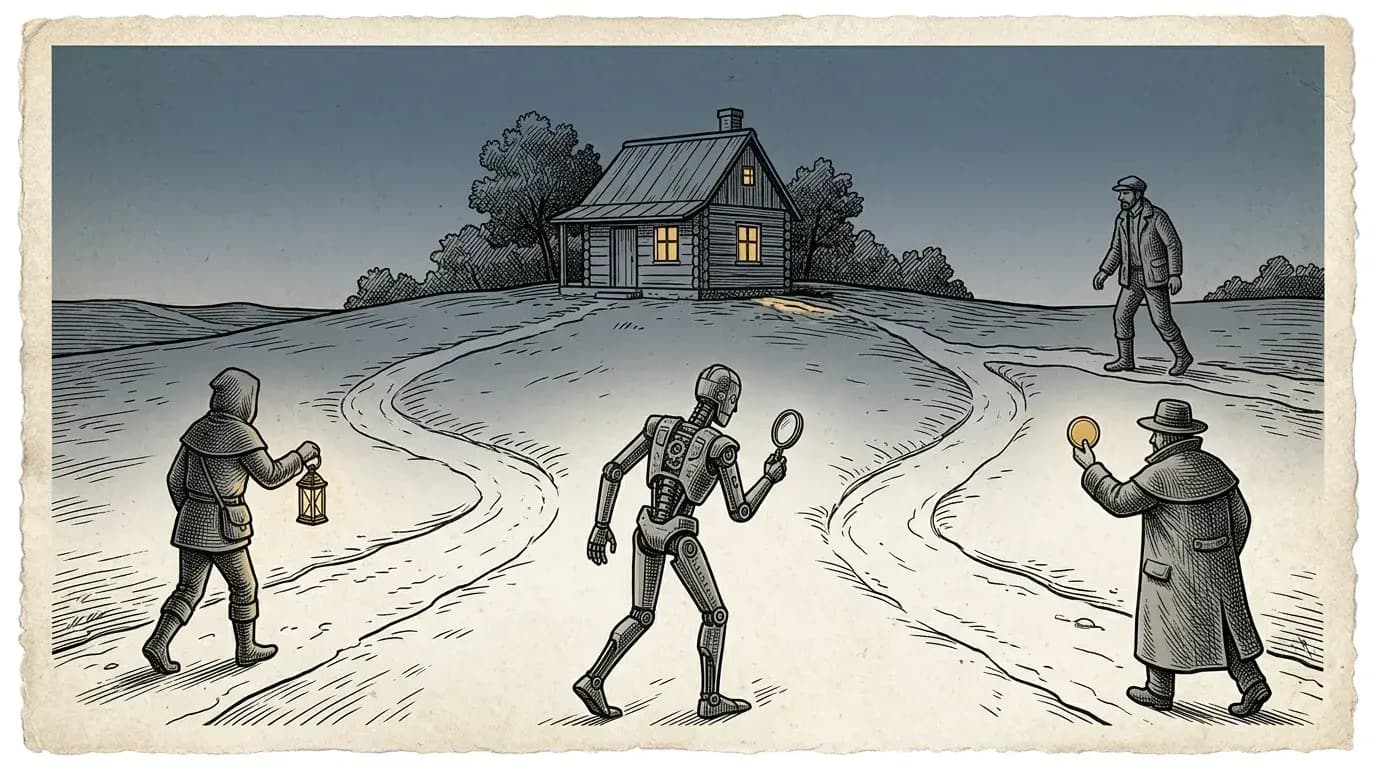
Vibe coding is software development driven by natural language prompts rather than manual line-by-line coding. You describe what you want — in plain English — and an AI model writes the code for you. Tools like Cursor, Lovable, Replit Agent, and Claude Code have made this workflow mainstream — and a wave of smaller ones sits alongside them in our AI / ML and developer tools categories.
What makes it "vibe coding" rather than just "AI-assisted development" is the mindset: you accept the AI-generated code without meticulously reviewing every line. You test by running, not by reading. When something breaks, you paste the error back into the AI and let it fix itself.
There's a new kind of coding I call "vibe coding", where you fully give in to the vibes, embrace exponentials, and forget that the code even exists.
As programmer Simon Willison put it: "If an LLM wrote every line of your code, but you've reviewed, tested, and understood it all, that's not vibe coding — that's using an LLM as a typing assistant." The distinction matters. Vibe coding is about speed and intuition over careful engineering.
The Numbers Behind the Boom
The growth of AI-powered development tools isn't anecdotal — it's backed by staggering numbers.
The vibe coding market is projected to reach $12.3 billion by 2027, growing at roughly 38% annually. Meanwhile, 84% of developers now use or plan to use AI coding tools — up from 70% just two years ago. The AI-assisted programming market itself could hit $26 billion by 2030.
But perhaps the most telling statistic: 25% of Y Combinator's Winter 2025 cohort had codebases that were 95% or more AI-generated. These aren't toy projects. They're venture-backed startups competing for real market share.
The New SaaS Gold Rush
The companies building vibe coding tools are experiencing growth that defies historical precedent. The same wave has reached the layer below them, where no-code platforms now compete with prompting for the same jobs.
Cursor — the AI-powered code editor — scaled from $1 million to $100 million in annual recurring revenue in just 12 months. By late 2025, it was in talks for a $10 billion valuation with $500 million ARR and over 1 million daily active users.
Lovable hit $100 million ARR just eight months after launch, with plans to close the year at $250 million. Replit grew from $2.8 million to $150 million ARR in under a year — a 50x revenue increase. The combined valuation of leading vibe coding startups grew 350% year-on-year, from roughly $7–8 billion in mid-2024 to over $36 billion in 2025.
And here's what's really reshaping the market: 63% of vibe coding users are non-developers. Product managers, designers, founders — people who never wrote a line of code — are now shipping UIs, full-stack apps, and entire SaaS products. The barrier to building software has effectively collapsed.
The barrier to creating software has fallen to near zero. When anyone can build a SaaS product over a weekend, the competitive advantage shifts from can you build it to should you build it — and can you make people care?
The SaaS Market: Bigger, Louder, More Crowded
There are now over 30,800 SaaS companies worldwide, with approximately 17,000 in the United States alone. The global SaaS market is projected to grow from $375 billion in 2026 to nearly $1.5 trillion by 2034.
But growth doesn't mean everything is fine. The market is showing clear signs of saturation in certain segments. Companies now use an average of 106 SaaS applications each, and 42% of organizations have cut SaaS budgets in response to economic uncertainty. The focus is shifting from "add more tools" to "consolidate what works."
Is SaaS Dead? The Great Unbundling
In early 2026, a dramatic sell-off wiped over $1 trillion in market capitalization from software stocks, triggered by fears that AI agents would replace traditional software workflows. Analysts at Forrester declared that "SaaS as we know it is dead." IDC questioned whether the entire category was obsolete.
The reality is more nuanced. Global SaaS spending is still projected to rise from $318 billion in 2025 to $576 billion by 2029. What's dying isn't SaaS itself — it's the old model.
IDC predicts that by 2028, 70% of software vendors will refactor their pricing from per-seat models to consumption, outcomes, or organizational capability-based models. The per-user, per-month era is ending because AI agents are replacing the humans who held those seats.
What This Means for Builders
If you're building a SaaS product in 2026, the game has changed:
The Quality Question
There's an elephant in the room. If 41% of all new code is AI-generated and a quarter of funded startups are running on 95%+ AI codebases, what does that mean for code quality and security?
AI-generated code often contains subtle security vulnerabilities — from improper input validation to insecure API patterns. A study by Stanford researchers found that developers using AI assistants produced significantly less secure code while believing it to be more secure. When entire codebases are generated without careful human review, the attack surface expands dramatically.
By 2026, AI agents are generating roughly ten times more code than human developers, according to industry analyses. That's an unprecedented amount of code that may have never been carefully reviewed by a human. The potential for technical debt and security vulnerabilities at scale is a real concern that the industry is only beginning to grapple with.
The Path Forward
The vibe coding revolution isn't going away. The tools will only get better, the barriers will only get lower, and the number of people capable of building software will only grow. The SaaS market in 2026 resembles the early app store era — an explosion of creativity mixed with an avalanche of noise.
For builders and founders, the lesson is clear: AI is the most powerful tool we've ever had for creating software, but it doesn't replace the need for taste, judgment, and genuine understanding of the problems you're solving. If you're hunting for problems actually worth solving, our 25 micro SaaS ideas for 2026 catalogs the narrow, money-adjacent kind that survive the noise.
The future belongs to people who can combine the speed of vibe coding with the intentionality of thoughtful engineering. Who can build fast and build right. Who understand that in a world where everyone can create software, the question isn't whether you can ship — it's whether what you ship actually matters.
If you have shipped something that matters, distribution is the next problem — but it is rarely the first one. Our post-ship playbook walks through what a second account, a stranger, a crawler and a paying customer each find in a freshly vibe-coded app, in the order those things cost you. Then browse the directory to see what you are up against, and list your own product alongside it.
In a world of AI-generated SaaS products, curation matters. SaaS Cubes is a hand-reviewed directory where quality stands out. Get a permanent backlink and real visibility. List your product →
Sources
- [1]Andrej Karpathy's original 'vibe coding' tweet — X (Twitter)
- [2]The Vibe Coding Market in 2025 — Market Clarity
- [3]Top Vibe Coding Statistics & Trends 2026 — Second Talent
- [4]SaaS As We Know It Is Dead: How To Survive The SaaS-pocalypse — Forrester
- [5]Is SaaS Dead? Rethinking the Future of Software in the Age of AI — IDC
- [6]85 SaaS Statistics, Trends and Benchmarks for 2026 — Vena Solutions
- [7]175+ Unmissable SaaS Statistics for 2026 — Zylo
- [8]Vibe-coding startup Anything nabs a $100M valuation — TechCrunch
- [9]Not all AI-assisted programming is vibe coding — Simon Willison's Blog
- [10]The State of Vibe Coding 2025 — Key Takeaways — Product Hunt
Mateusz Pawlica
With over 12 years of experience building digital products — from mobile apps to AI-powered web platforms — Mateusz specializes in creating modern web applications and implementing AI automation for businesses. He has shipped 20+ projects across SaaS, e-commerce, and education, including Mapa Oświatowa, a map of every school in Poland.