Why Backlinks Are a Must-Have for Your SaaS
Backlinks remain one of the strongest ranking signals in 2026. Here's why every SaaS founder should invest in link building — backed by data, case studies, and proven strategies.
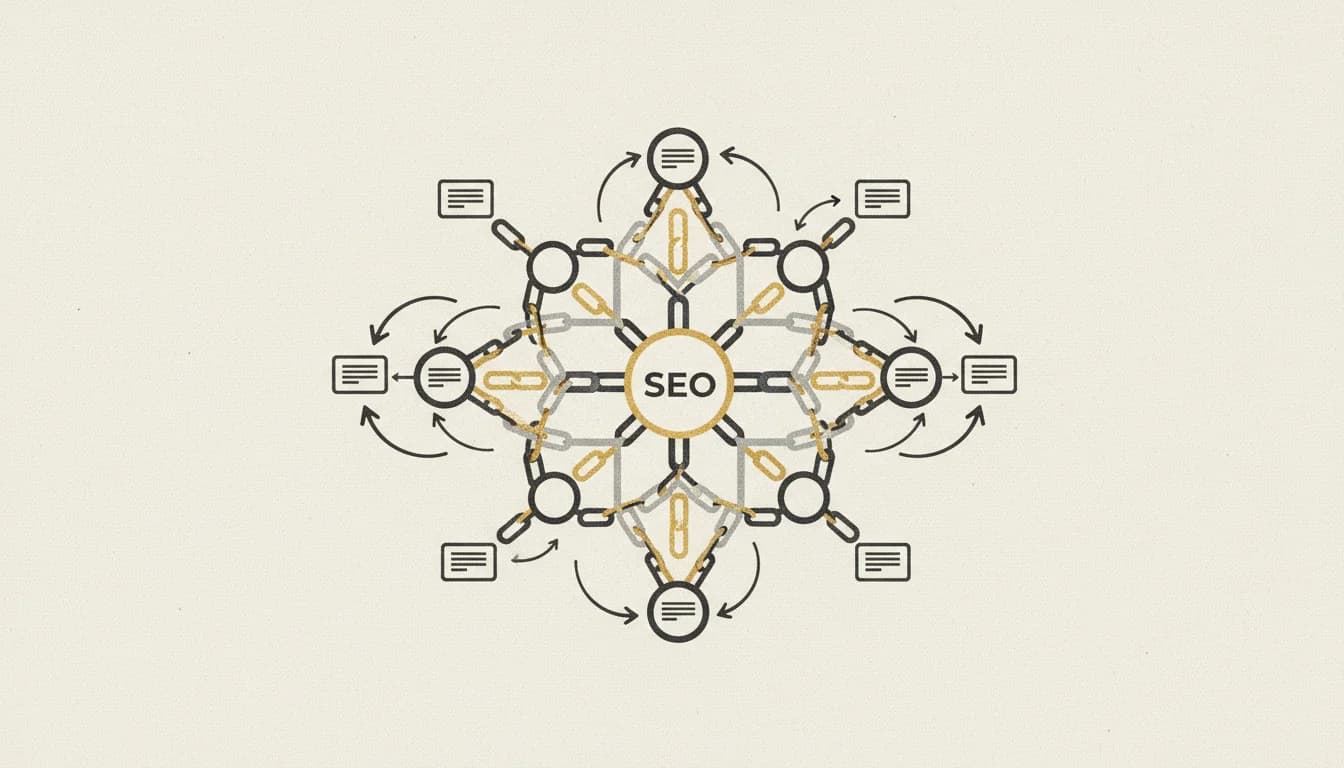
Every SaaS founder dreams of the same thing: a steady stream of qualified visitors landing on their site without paying for every single click. Organic traffic is the compound interest of digital marketing — it builds on itself, costs less over time, and converts better than almost any paid channel. But there's a catch. To earn that organic traffic, you need Google to trust your site. And the single most powerful signal of trust? Backlinks.
Over 90% of pages ranking in Google's top 10 have at least one referring domain pointing to them. If your SaaS has no backlink strategy, you're competing with one hand tied behind your back.
What Are Backlinks (and Why Should You Care)?
A backlink is simply a link from one website to another. When a respected SaaS blog, industry publication, or product directory links to your site, it functions as a vote of confidence — a signal telling Google that your content is worth surfacing.
Google's ranking algorithm weighs hundreds of factors, but backlinks have remained near the top of the list for over two decades. The logic is straightforward: if multiple credible sources reference your content, it's probably valuable. More high-quality referring domains generally means higher rankings, which means more organic traffic, which means more signups.
For SaaS companies specifically, backlinks serve a dual purpose. They improve your search visibility and they drive direct referral traffic from relevant audiences — the exact people who might become your customers.
The Numbers Don't Lie
The data on backlinks and SEO performance is unambiguous.
Ahrefs found a strong correlation (0.68) between the number of backlinks and Google rankings. Pages sitting in position #1 have an average of 3.8 times more backlinks than pages in positions #2 through #10. And it's not just about total links — the number of unique referring domains is what matters most.
Meanwhile, 49% of marketers report that organic search is their most profitable acquisition channel. For every dollar spent on content marketing — the primary engine behind earning backlinks — businesses see an average return of $2.77. That's a 277% ROI before you even count the compounding effect over time.
Backlinks vs. Paid Ads: The Long Game
Paid ads are the microwave. Backlinks are the slow cooker.
Google Ads, Meta campaigns, LinkedIn sponsored content — they all deliver results fast. You pay, you get traffic, you get leads. But the moment you stop paying, the traffic stops. Entirely. Your cost-per-click stays the same (or rises), and you're locked into an indefinite spending cycle just to maintain baseline visibility.
Organic traffic earned through backlinks works differently. A single well-placed guest post or product listing can send referral traffic and SEO value to your site for years. One strong backlink from an industry publication continues boosting your domain authority long after the initial effort. The work compounds.
Consider this: a SaaS company spending $5,000 per month on paid ads gets $5,000 worth of traffic. Stop spending, traffic goes to zero. That same $5,000 invested in link building — guest posts, directory listings, content partnerships — creates permanent assets. After 12 months of consistent link building, you could be generating the equivalent of $10,000–$20,000 in organic traffic value every month, with no ongoing ad spend.
Paid ads rent attention. Backlinks build equity. Every quality link you earn is a permanent asset that continues generating value — compounding your organic traffic month after month while your competitors keep feeding the ad machine.
Five Backlink Strategies That Actually Work for SaaS
Not all link building is created equal. Here are the strategies that consistently deliver results for SaaS companies — ranked by effectiveness based on surveys of over 500 SEO professionals. If you want to see what a curated listing looks like in practice, browse the directory — every entry there carries a permanent do-follow link to the product.
Real SaaS Companies, Real Results
Theory is nice. Results are better. Here are three SaaS companies that invested in backlink strategies and saw measurable growth.
Frevvo — a workflow automation platform — focused on building high-quality backlinks from relevant industry publications. The result: a 346% increase in organic traffic and a significant boost in domain authority. Their approach was straightforward: create valuable content, earn links from sites their audience actually visits.
Good Annotations — a document annotation tool — secured 300 new backlinks within 90 days through a targeted content and outreach campaign. The outcome: 365,000 page views and 5,000 new email subscribers in three months. Their cost per acquired subscriber through organic traffic was a fraction of what paid channels would have required.
Toast POS — the restaurant management platform — acquired 41 high domain-authority backlinks through industry-focused content marketing. Those 41 links added an estimated $195,000 in monthly organic traffic value. That's the equivalent of spending $195K on Google Ads every single month — generated by fewer than 50 well-placed links.
89% of marketers state that link quality outweighs link quantity. The era of chasing hundreds of low-quality backlinks is over — what matters now is earning links from relevant, authoritative sources in your niche.
Quality Over Quantity: The New Rules
Here's where many SaaS founders go wrong. They hear "you need backlinks" and start buying links from Fiverr, submitting to hundreds of low-quality directories, or participating in link exchange schemes. This approach doesn't just fail — it can actively harm your rankings.
Google's algorithm has evolved dramatically. Purchased links, link farms, and private blog networks (PBNs) can trigger manual penalties that tank your rankings overnight. The number of unique, relevant referring domains matters far more than the total count of backlinks. Ten links from respected industry sites will outperform a thousand links from irrelevant directories every single time.
The modern rules of link building are simple:
- Relevance first. A link from a SaaS review site or industry blog is worth more than a link from a random news aggregator with a higher domain authority.
- Unique referring domains matter most. Fifty links from one website count far less than fifty links from fifty different websites.
- Anchor text diversity. Natural backlink profiles have varied anchor text. If every link uses the exact same keyword-rich anchor, Google knows something is off.
- Editorial links beat self-placed links. A journalist or blogger choosing to link to your content is infinitely more valuable than a link you placed yourself in a forum signature.
What About AI Search?
Here's a forward-looking reason to invest in backlinks now. AI-powered search engines — ChatGPT, Perplexity, Google's AI Overviews — are rapidly gaining market share. And according to a 2025 survey, 73.2% of SEO experts believe backlinks influence AI search results.
The logic makes sense. AI models are trained on web data, and they use signals of authority and relevance to determine which sources to cite. Sites with strong backlink profiles — high domain authority, many referring domains from relevant sources — are more likely to be referenced in AI-generated answers.
Investing in backlinks today doesn't just improve your Google rankings. It positions your SaaS to be cited by the AI search engines that are reshaping how people discover software.
Start Building Your Backlink Profile Today
You don't need a massive budget or a dedicated SEO team to start earning backlinks. Here's a practical checklist to get moving. The first item costs nothing: find the directory category that matches what you built and submit there.
The compounding effect of backlinks means the best time to start was six months ago. The second best time is today. Every quality link you earn builds on the last one, gradually transforming your site from an unknown into an authority — and your organic traffic from a trickle into a stream that grows month after month, without spending another dollar on ads.
Every listing on SaaS Cubes includes a permanent do-follow backlink. Submit your product and start building domain authority today — it's free to get started. List your SaaS →
Sources
- [1]Are Backlinks a Google Ranking Factor? Complete Analysis — Rankability
- [2]How Important Are Backlinks for SEO? — Search Engine Land
- [3]The Correlation Between Backlinks and Traffic — Similarweb
- [4]8 Backlink Statistics: How Links Influence SEO Rankings — Growtha
- [5]Link Building Statistics 2026: Insights from 518 SEO Experts — Editorial.link
- [6]SaaS Link Building: 22 Strategies to Capture Traffic — Skale
- [7]B2B SaaS Link Building: Your Essential Guide — Stratabeat
- [8]SaaS SEO Case Studies: Organic Traffic and Revenue Growth — MiroMind
- [9]SaaS SEO Case Study: +$195k Organic Traffic Value Added — Rock The Rankings
- [10]Are Backlinks Still Important for SEO and AI Search in 2026? — Editorial.link
- [11]Organic vs. Paid Search: 84 Astonishing Statistics — HigherVisibility
- [12]Link Building Is Evolving — Brands Using the Old Playbook Will See Visibility Decline — Entrepreneur
- [13]124 SEO Statistics for 2024 — Ahrefs
- [14]7 Winning SaaS SEO Case Studies You Can Replicate — uSERP
Mateusz Pawlica
With over 12 years of experience building digital products — from mobile apps to AI-powered web platforms — Mateusz specializes in creating modern web applications and implementing AI automation for businesses. He has shipped 20+ projects across SaaS, e-commerce, and education, including Mapa Oświatowa, a map of every school in Poland.